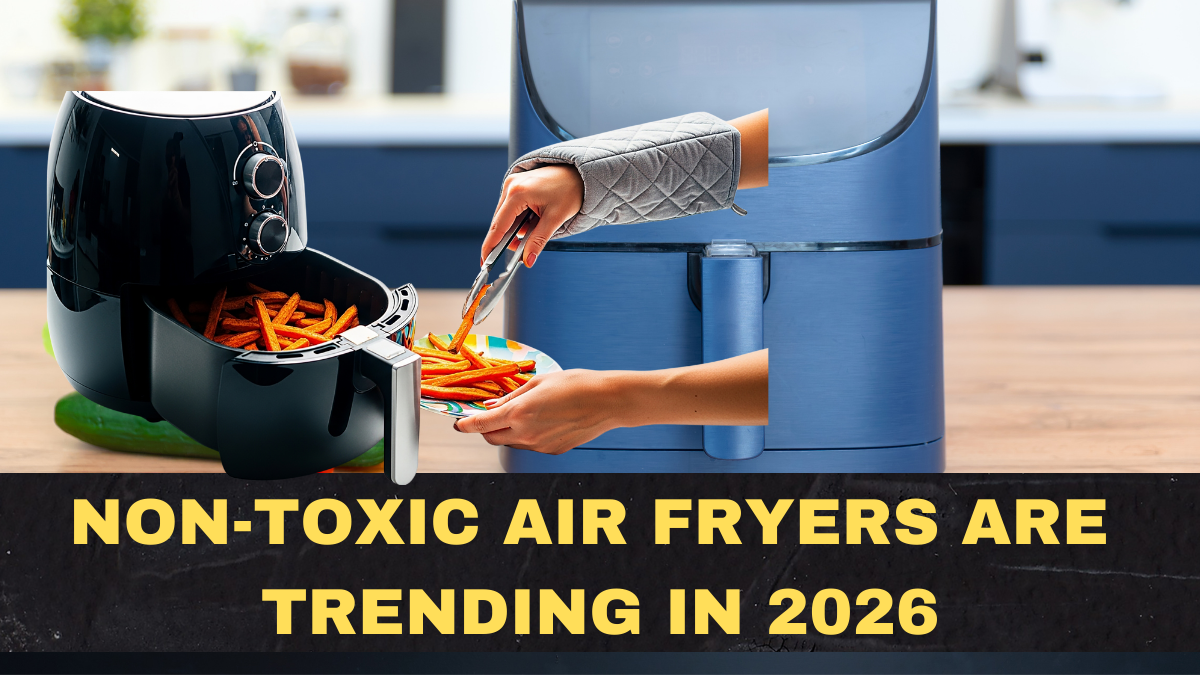
The rise of the non toxic air fryer is not just another kitchen fad. It’s a direct response to growing consumer anxiety about chemical coatings, long-term health risks, and what exactly happens when cookware heats up at high temperatures. In 2026, buyers are no longer impressed by just speed, crispiness, or smart presets. They want reassurance that their appliances won’t quietly leach questionable chemicals into everyday meals.
Search interest in PFAS free cookware and safe kitchen appliances has exploded because people are connecting dots that were ignored for decades. If a pan’s coating flakes into food, what happens when that coating is repeatedly blasted with heat inside an air fryer? That uncomfortable question is what pushed the non toxic air fryer into the mainstream conversation.
Why Non-Toxic Air Fryers Suddenly Became a Big Deal
The shift didn’t happen overnight. It built slowly as documentaries, lab reports, and whistleblower stories brought attention to PFAS chemicals used in non-stick coatings.
Three forces collided in 2026:
• Greater public awareness of PFAS health concerns
• Social media-driven product education
• A cultural shift toward “low-tox” living
Once consumers learned that many traditional non-stick coatings fall under the PFAS family, demand for PFAS free cookware surged. The air fryer — a high-heat device used daily — became the obvious place to start upgrading.
What PFAS Actually Are (And Why People Want Them Gone)
PFAS stands for per- and polyfluoroalkyl substances. These chemicals are used to make surfaces slippery, stain-resistant, and water-resistant. That’s why they show up in non-stick pans, food packaging, and even clothing.
The problem is not just toxicity. It’s persistence.
PFAS are often called “forever chemicals” because:
• They don’t break down easily in the environment
• They accumulate in the human body
• They have been linked to hormone disruption, liver issues, and immune problems
This is why PFAS free cookware is no longer a niche preference. It’s becoming a baseline expectation.
What “Non-Toxic” Really Means in Air Fryer Marketing
Here’s the uncomfortable truth: “non-toxic” is not a regulated label.
Brands use it loosely to signal:
• No traditional PTFE or PFOA coatings
• Ceramic or stainless steel interiors
• Minimal chemical treatments
But not all “non toxic air fryer” claims are equal.
Some products still contain:
• Hybrid coatings with unknown additives
• Low-grade ceramics that degrade quickly
• Non-stick layers bonded with chemical adhesives
That’s why buyers are learning to ignore vague claims and look specifically for PFAS free cookware certifications or material disclosures.
The Materials That Actually Make an Air Fryer Non-Toxic
If you want a genuinely safer appliance, material choice matters more than branding.
The safest interior options in a non toxic air fryer are:
• Stainless steel baskets
• Solid ceramic-coated baskets (no PTFE base)
• Enamel-coated metal
These materials:
• Don’t off-gas at high heat
• Don’t flake into food
• Don’t rely on synthetic non-stick chemicals
This is why high-end models are quietly ditching traditional coatings and moving toward bare metal or ceramic interiors.
Why People Are Replacing Perfectly Good Air Fryers
This trend isn’t about broken appliances. It’s about risk reassessment.
People are replacing working units because:
• They learned about PFAS risks too late
• The old coating is visibly peeling
• They cook daily in the air fryer
• They want alignment with a low-tox lifestyle
In 2026, kitchen upgrades are increasingly driven by health logic, not feature envy. The non toxic air fryer fits perfectly into that mindset.
Are Ceramic-Coated Air Fryers Actually Safe
Ceramic sounds comforting. But not all ceramic coatings are created equal.
Good ceramic coatings:
• Are silica-based
• Are free of PTFE and PFOA
• Maintain integrity under repeated heat
Bad ceramic coatings:
• Sit on top of a PTFE base
• Crack and flake quickly
• Lose non-stick performance fast
This is where PFAS free cookware verification matters. A ceramic label alone doesn’t guarantee safety.
The Trade-Off Nobody Mentions: Convenience vs Safety
There’s a reason chemical coatings were used for decades. They work.
Switching to a non toxic air fryer means accepting:
• Slightly more cleaning effort
• Occasional food sticking
• Learning new cooking habits
But most buyers report something interesting: after a few weeks, they stop noticing the inconvenience. What they do notice is peace of mind.
Why “Safe Kitchen Appliances” Became a Real Buying Category
This isn’t limited to air fryers.
In 2026, consumers are applying the same logic to:
• Rice cookers
• Coffee machines
• Non-stick pans
• Electric grills
Safe kitchen appliances are now marketed like organic food was a decade ago. Once awareness crosses a threshold, it never goes back.
How to Tell If an Air Fryer Is Truly Non-Toxic
Ignore front-of-box marketing.
Look for:
• Explicit “PFAS-free” or “PTFE-free” claims
• Stainless steel or solid ceramic interiors
• Full material disclosure in specs
• Third-party safety certifications
If a brand won’t clearly state what its basket is made of, assume it’s not a true non toxic air fryer.
Is This Just Another Wellness Hype Cycle
No. This one has structural momentum.
Why it’s different:
• PFAS regulation pressure is increasing
• Consumer trust in coatings is collapsing
• Brands are already retooling product lines
• Younger buyers are building long-term habits
This trend is moving from “premium option” to default expectation.
Conclusion
The non toxic air fryer trend isn’t driven by fear. It’s driven by information finally reaching consumers at scale. Once people understand what PFAS are and how cookware coatings behave under heat, going back to traditional non-stick feels irrational.
In 2026, the real kitchen upgrade isn’t smarter presets or app controls. It’s removing unnecessary chemical exposure from daily cooking. That’s why PFAS free cookware and safe kitchen appliances aren’t fringe ideas anymore — they’re the new baseline.
If you’re buying an air fryer this year, the question is no longer “Which one crisps best?”
It’s “Which one won’t quietly harm me over time?”
FAQs
What makes an air fryer non-toxic?
A non-toxic air fryer uses stainless steel or ceramic interiors and avoids PFAS-based non-stick coatings.
Is PFAS-free cookware really safer?
Yes. PFAS-free cookware avoids chemicals linked to long-term health and environmental risks.
Are ceramic-coated air fryers always safe?
No. Some ceramic coatings sit on top of PFAS layers. Always verify material disclosures.
Do non-toxic air fryers work as well?
Yes, but they may require slightly more oil and cleaning effort.
Is switching to a non-toxic air fryer worth it?
For daily users, the health peace of mind alone makes the upgrade worthwhile.