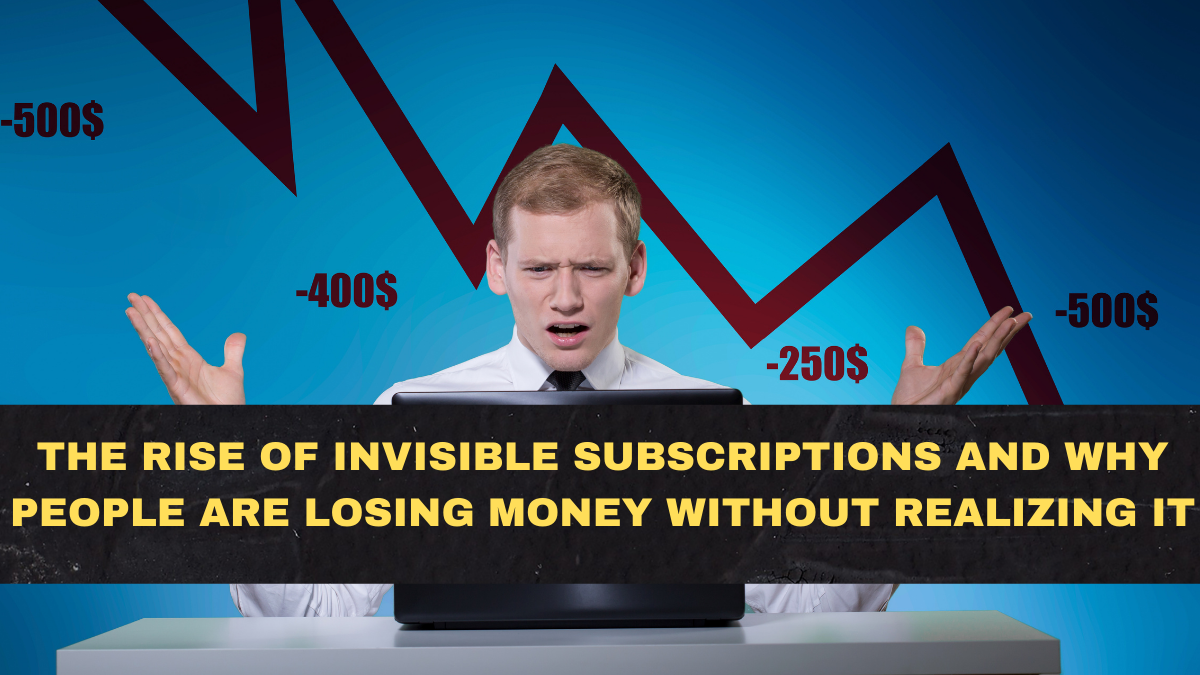
Invisible subscriptions have quietly become one of the biggest money leaks for consumers in 2026. Unlike obvious monthly plans you sign up for knowingly, these charges blend into bank statements as small, recurring payments that rarely raise alarms. Over time, they add up—draining wallets without triggering the usual “cancel now” instinct.
What makes invisible subscriptions especially dangerous is how they exploit convenience. One-click trials, bundled services, app-based payments, and auto-renew defaults create subscription traps that are hard to spot and even harder to unwind. Most people aren’t overspending—they’re under-noticing.
What Invisible Subscriptions Actually Are
Invisible subscriptions are recurring charges that continue quietly after a trial, bundle, or one-time action. They don’t feel like subscriptions because they’re rarely labeled clearly and often cost “just enough” to avoid attention.
Common examples include:
• App trials that auto-convert to monthly plans
• Add-on services bundled with purchases
• In-app tools enabled by default
• Premium features activated during onboarding
• Memberships hidden inside payment wallets
Individually, these charges seem harmless. Collectively, they form a steady drain.
Why Recurring Payments Are Harder to Track in 2026
Payments have become frictionless—and that’s the problem. Digital wallets, app stores, and unified payment systems prioritize speed over visibility.
Here’s what changed:
• Fewer confirmation prompts after the first payment
• Consolidated billing across apps and devices
• Generic merchant names on statements
• Annual renewals that trigger months later
• Silent price increases after “introductory” periods
As recurring payments fade into the background, awareness drops.
How Subscription Traps Are Designed
Subscription traps aren’t accidental. They’re optimized.
Design patterns that keep subscriptions invisible include:
• Free trials requiring payment details upfront
• Cancellation buried deep in account settings
• “Pause” options replacing real cancellation
• Reminders disabled by default
• Benefits framed as “don’t miss out”
These patterns don’t force you to stay—they exhaust you into staying.
The Psychology Behind Ignoring Small Charges
Invisible subscriptions work because of how people think about money. Small amounts feel negligible, especially when spread across weeks.
Psychological factors at play:
• Loss aversion (avoiding the hassle of canceling)
• Anchoring (small fees feel acceptable)
• Forgetting (out of sight, out of mind)
• Rationalization (“I might use it later”)
Over time, these tiny decisions create a large, unnoticed expense.
Where Invisible Subscriptions Hide Most Often
Certain categories are especially prone to hidden subscriptions.
High-risk areas include:
• Fitness and wellness apps
• Photo and video editing tools
• Cloud storage upgrades
• Streaming add-ons
• Productivity and AI tools
If you’ve installed apps impulsively, you likely have at least one invisible subscription.
Why Banks and Apps Rarely Warn You
You might expect alerts—but most systems aren’t incentivized to interrupt revenue.
Reasons warnings are rare:
• Payments are authorized and “legitimate”
• Merchants meet compliance requirements
• Alerts increase churn and support tickets
• Responsibility is shifted to the user
This creates a perfect environment for invisible subscriptions to thrive.
How Much Money People Are Losing Without Knowing
The real damage isn’t one service—it’s accumulation. Many users lose small amounts across multiple platforms.
Typical patterns:
• 3–7 forgotten subscriptions per user
• Monthly losses that feel insignificant
• Annual losses that feel shocking
• Renewals that hit at the worst time
By the time people notice, hundreds—or more—are already gone.
How to Find Your Invisible Subscriptions
Awareness is the first fix. You don’t need advanced tools—just a systematic approach.
Steps to uncover them:
• Review bank statements for repeating charges
• Check app store subscription lists
• Audit digital wallet payment histories
• Search emails for “trial,” “renewal,” or “membership”
• Set calendar reminders for renewals
This one-time effort often pays for itself immediately.
How to Cancel Without Falling Into More Traps
Canceling isn’t always straightforward. Some services deliberately slow you down.
Tips to cancel cleanly:
• Cancel from the original platform, not email links
• Take screenshots of confirmation pages
• Avoid “pause” unless you intend to resume
• Remove saved payment methods afterward
• Verify cancellation in the next billing cycle
Persistence beats frustration.
Will Invisible Subscriptions Get Worse
Yes—because the model works. As more services move to recurring revenue, visibility decreases.
What’s likely next:
• More micro-subscriptions
• Longer trial-to-renew gaps
• Bundled renewals across ecosystems
• Fewer explicit reminders
Without stronger consumer habits, invisible subscriptions will remain profitable.
How to Protect Yourself Going Forward
You don’t need to quit subscriptions—just control them.
Simple safeguards:
• Use a single card for subscriptions
• Disable auto-renew where possible
• Set monthly “subscription review” reminders
• Be skeptical of “free” trials
• Cancel immediately after signing up if unsure
Convenience should never replace awareness.
Conclusion
Invisible subscriptions aren’t a budgeting failure—they’re a design success working against users. Through subtle subscription traps and frictionless recurring payments, money slips away quietly, month after month. The fix isn’t extreme discipline—it’s visibility.
In 2026, the smartest financial habit isn’t cutting expenses. It’s noticing them.
FAQs
What are invisible subscriptions?
They are recurring charges that continue quietly after trials or one-time actions, often without clear reminders.
Why don’t banks flag these payments?
Because the charges are authorized and legitimate, banks treat them as normal transactions.
How often should I review subscriptions?
At least once every three months to catch renewals and unused services.
Are small subscriptions really a problem?
Yes. Multiple small charges accumulate into significant annual losses.
Can apps legally make cancellation difficult?
In many regions, yes—within compliance limits. That’s why user vigilance matters.
Click here to know more.