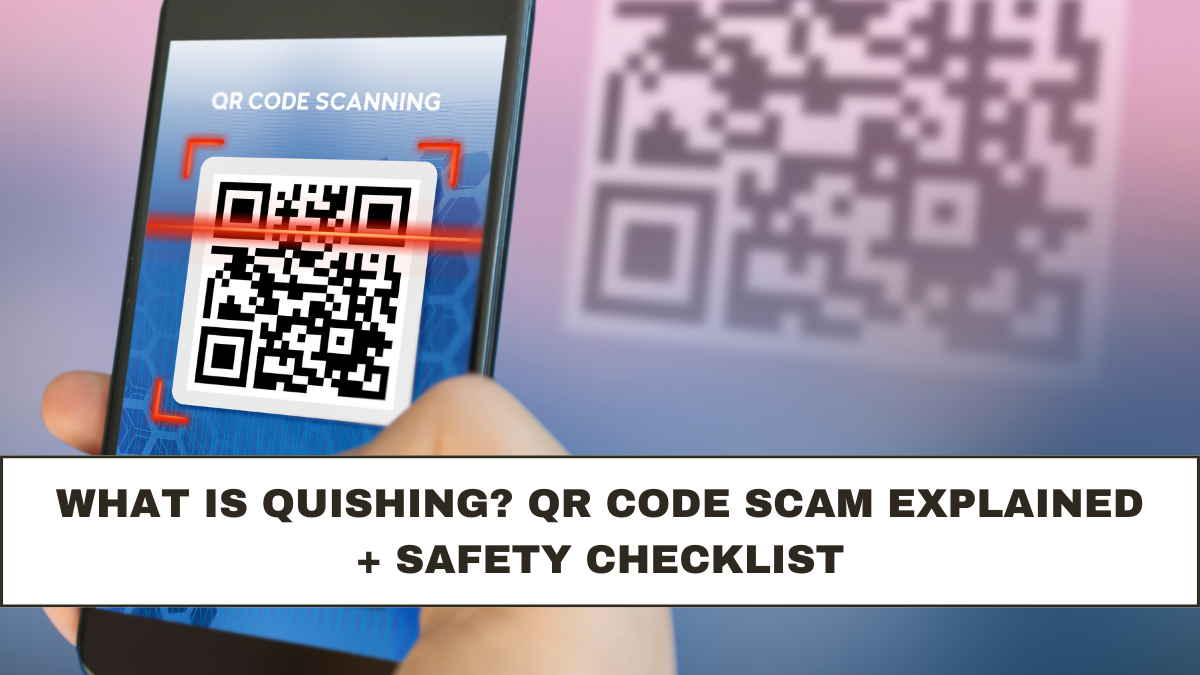
The quishing meaning has become one of the most searched cyber safety terms in India as QR-based payment scams continue to rise. With UPI usage growing rapidly, scammers are now exploiting QR codes to trick users into authorizing payments unknowingly. These scams look simple on the surface but are cleverly designed to steal money in seconds.
Understanding the quishing meaning is essential for anyone who uses UPI apps, scans QR codes, or makes digital payments regularly. From fake payment requests to misleading posters and messages, QR code scams are evolving fast and targeting people across age groups.
As part of growing cyber safety awareness, learning how these scams work and how to stay protected has become more important than ever.
What Is Quishing and Why Is It Increasing in India?
The quishing meaning comes from combining “QR” and “phishing.” It refers to frauds where scammers use malicious QR codes to trick people into making unauthorized payments or revealing sensitive information. Unlike traditional phishing that relies on fake links or emails, a QR code scam hides the danger inside a scannable image.
India’s rapid adoption of UPI and digital payments has unintentionally created opportunities for such frauds. Scammers take advantage of trust, urgency, and lack of awareness.
The rise in India scams involving QR codes is linked to:
• Increased cashless transactions
• High dependency on mobile payment apps
• Quick scanning habits without verification
• Fake customer support messages
• Fraudsters exploiting public QR displays
Understanding the quishing meaning helps users recognize that scanning a QR code is not always safe.
How QR Code Scams Actually Work
A typical QR code scam works by convincing the victim to scan a code under false pretenses. Once scanned, the code either redirects to a malicious page or triggers a payment request that transfers money from the victim’s account.
Common methods used in quishing include:
• Fake “receive money” QR codes sent via WhatsApp
• QR codes pasted over genuine merchant codes
• Fraudsters posing as customer care agents
• Codes claiming refunds, cashback or failed payments
• QR images shared through SMS or social media
Many people misunderstand the quishing meaning, assuming QR codes can only be used to receive money. In reality, scanning certain QR codes can initiate UPI payment approvals.
How UPI Fraud Happens Through Quishing
UPI fraud is central to most QR-based scams in India. Criminals often manipulate victims into approving payments unknowingly. They use urgency and technical language to confuse users.
Common UPI fraud techniques include:
• Asking users to scan a QR to “receive” money
• Sending fake payment reversal messages
• Impersonating bank or app support staff
• Creating QR codes linked to merchant payment requests
• Pressuring victims to act quickly
Understanding quishing meaning helps users realize that legitimate refunds or payments never require scanning unknown QR codes.
Why Quishing Is So Effective
The success of quishing lies in how simple and convincing it looks. QR codes feel safe because they are widely used in shops, parking areas, restaurants and delivery apps. Scammers take advantage of this familiarity.
Reasons quishing scams work so well include:
• QR codes don’t show URLs clearly
• People trust visual prompts
• Urgency reduces rational thinking
• Lack of awareness about QR misuse
• Growing digital dependency
This is why cyber safety education has become essential, especially as India moves deeper into digital payments.
Common Scenarios Where Quishing Happens
Understanding common scam situations helps users avoid falling victim. Many India scams follow predictable patterns.
Popular quishing scenarios include:
• Fake delivery or courier confirmation QR codes
• Messages claiming failed UPI transactions
• Rental or OLX buyer scams
• Fake electricity or mobile bill refunds
• Restaurant or parking QR tampering
• Fake charity or donation QR posters
Each of these scenarios uses emotional triggers like urgency, fear, or reward to bypass caution. Knowing the quishing meaning helps users pause before scanning.
Safety Checklist to Protect Yourself From QR Code Scams
Following basic cyber hygiene can prevent most QR code scam cases. Here is a practical safety checklist every digital user should follow:
• Never scan QR codes sent by unknown people
• Do not scan QR codes to receive money
• Verify merchant identity before scanning
• Avoid QR codes pasted in public places
• Never share OTPs or UPI PINs
• Use official apps only for payments
• Enable transaction alerts
• Report suspicious activity immediately
• Educate family members about quishing
This checklist plays a crucial role in strengthening cyber safety habits across households.
What To Do If You Fall Victim to a QR Scam
If someone becomes a victim of a QR code scam, immediate action can reduce losses. Acting quickly is essential.
Steps to take immediately:
• Block your bank account or UPI app
• Contact customer support of your payment app
• Report the fraud to your bank
• File a complaint on the national cybercrime portal
• Save screenshots and transaction IDs
• Monitor account activity closely
Quick reporting helps authorities track India scams and may increase the chance of recovering funds.
Why Awareness of Quishing Is Increasing in India
Searches related to quishing meaning, UPI fraud, and cyber safety have increased as more people share scam experiences online. News reports, police advisories and social media warnings are pushing awareness forward.
Factors driving awareness include:
• Rising digital literacy campaigns
• Increased fraud reporting
• Media coverage of cybercrime
• Government cyber safety advisories
• Community sharing of scam alerts
This awareness is encouraging safer payment behaviour across India.
The Future of Cyber Safety in a QR-Driven World
As QR usage continues to grow, cybercriminals will also evolve their methods. This makes awareness and education the strongest defenses. Understanding the quishing meaning is no longer optional — it’s essential for safe digital living.
Banks, app developers and regulators are working to add stronger warnings, better authentication and scam detection tools. However, user awareness remains the first line of defense.
Conclusion
The rising number of QR-related frauds has made it crucial to understand the quishing meaning and how QR code scams operate. From fake refund messages to misleading payment requests, scammers use trust and urgency to exploit users. By staying alert, following cyber safety practices and educating others, Indians can protect themselves from UPI fraud and online scams. Awareness, caution and informed action are the strongest tools against digital fraud in today’s connected world.
FAQs
What is the meaning of quishing?
Quishing refers to scams that use QR codes to trick users into making unauthorized payments or sharing sensitive data.
How does a QR code scam work?
Scammers send or display QR codes that initiate payments or redirect users to fake pages when scanned.
Can scanning a QR code cause UPI fraud?
Yes, if the QR code triggers a payment request or leads to a fake interface, it can result in UPI fraud.
How can I stay safe from quishing?
Avoid scanning unknown QR codes, never share OTPs, and verify payment requests before approving them.
Is quishing common in India?
Yes, India scams involving QR codes have increased due to widespread UPI usage and low awareness.