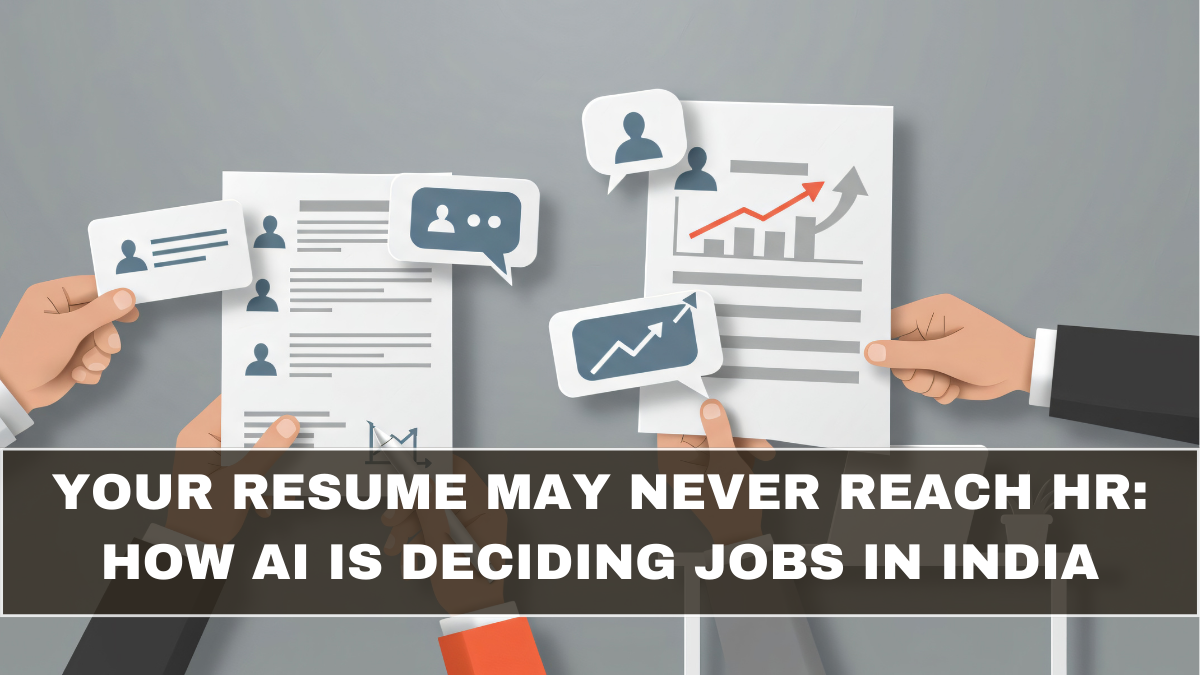
The rise of AI hiring India is transforming the recruitment landscape faster than most job seekers realize. Across industries, Indian companies are increasingly using algorithms and automation to filter, rank, and shortlist candidates—often before a human recruiter ever sees a resume. This shift toward recruitment automation and advanced job tech is redefining how hiring decisions are made in 2025 and beyond.
From IT services and startups to finance, e-commerce, and even government-linked enterprises, AI-driven recruitment tools are quietly becoming the first gatekeepers of employment. The growth of AI hiring India reflects a broader move toward efficiency, data-driven decision-making, and scalable talent acquisition.
Why AI Hiring Is Growing Rapidly in India
Several structural changes in the Indian job market have accelerated the adoption of AI hiring India practices. Companies receive thousands of applications for a single role, making manual screening slow and costly. Recruitment automation helps organizations manage volume while maintaining speed.
Key reasons behind the growth include:
• High application volumes for limited roles
• Pressure to reduce hiring time and cost
• Expansion of remote and hybrid hiring
• Demand for skill-based rather than degree-based hiring
• Availability of affordable AI-powered job tech platforms
As competition intensifies, companies see recruitment automation as a necessity rather than a luxury.
How AI Screens Resumes Before HR Sees Them
In the AI hiring India ecosystem, resumes often pass through multiple automated layers before reaching human recruiters. These systems use natural language processing and machine learning to analyze candidate profiles.
AI screening tools typically evaluate:
• Keywords related to job descriptions
• Skills alignment with role requirements
• Past job titles and experience relevance
• Education and certifications
• Employment gaps or inconsistencies
• Resume structure and formatting
If a resume does not meet the algorithm’s criteria, it may never reach HR. This reality has made job tech literacy essential for modern job seekers.
Recruitment Automation Beyond Resume Screening
Resume filtering is only the first step in AI hiring India. Recruitment automation now extends across the entire hiring funnel. Many Indian companies use AI to conduct initial assessments, video interviews, and even behavioural analysis.
Advanced recruitment automation tools can:
• Schedule interviews automatically
• Conduct AI-led chat interviews
• Assess communication tone and confidence
• Score technical test responses
• Predict candidate-job fit using data models
These tools aim to reduce human bias and standardize evaluations, though their effectiveness remains a topic of debate.
How AI Hiring Affects Indian Job Seekers
The impact of AI hiring India on job seekers is significant. While automation can reduce bias in theory, it also introduces new challenges for candidates unfamiliar with how algorithms work.
Common effects include:
• Resumes rejected despite relevant experience
• Overemphasis on keywords rather than capability
• Difficulty standing out without optimized profiles
• Increased importance of digital presence
• Reduced opportunities for unconventional career paths
Job seekers now need to think strategically about how their resumes interact with job tech systems.
Skills and Profiles AI Prefers in 2025
As AI hiring India evolves, certain skill patterns and candidate traits are being prioritized. Algorithms are trained on past hiring data, which influences the types of profiles they favor.
Commonly favored elements include:
• Clearly defined technical skills
• Quantifiable achievements
• Continuous learning indicators
• Certifications aligned with role needs
• Consistent job progression
• Industry-relevant keywords
This trend is pushing professionals to adapt their resumes and online profiles to align with recruitment automation expectations.
Concerns Around Bias and Transparency
Despite its efficiency, AI hiring India raises concerns about fairness and transparency. Algorithms are only as unbiased as the data they are trained on. If past hiring patterns favored certain backgrounds, AI systems may unintentionally reinforce those biases.
Major concerns include:
• Lack of transparency in rejection decisions
• Potential exclusion of diverse talent
• Over-filtering of career switchers
• Difficulty appealing AI-based rejections
• Ethical implications of automated decision-making
These concerns have sparked discussions around responsible job tech usage and regulatory oversight.
How Indian Companies Justify AI Hiring
Organizations adopting AI hiring India argue that automation improves efficiency and reduces subjectivity. Recruiters benefit from faster shortlisting, better data insights, and reduced administrative workload.
Companies cite benefits such as:
• Faster hiring cycles
• Reduced recruitment costs
• Standardized evaluations
• Data-backed hiring decisions
• Scalability during mass hiring
For employers, recruitment automation is about survival in a competitive talent market.
How Job Seekers Can Adapt to AI Hiring
To succeed in the age of AI hiring India, job seekers must optimize their approach. Understanding how recruitment automation works can improve visibility and success rates.
Practical adaptation strategies include:
• Tailoring resumes for each job role
• Using role-specific keywords naturally
• Highlighting measurable achievements
• Keeping LinkedIn profiles updated
• Avoiding complex resume formatting
• Demonstrating continuous skill development
Being AI-aware is now a critical career skill in India’s evolving job market.
The Future of Job Tech in India
The future of AI hiring India points toward deeper integration of automation and human judgment. While AI will continue to handle screening and assessments, final decisions are likely to involve human oversight.
Expected trends include:
• Hybrid AI-human recruitment models
• Increased regulation around AI hiring
• Greater transparency in AI decisions
• Focus on skills-based hiring frameworks
• Ethical standards for recruitment automation
As job tech matures, balancing efficiency with fairness will become central to India’s hiring ecosystem.
Conclusion
The expansion of AI hiring India marks a major shift in how jobs are filled and careers are built. Recruitment automation and advanced job tech have made hiring faster, more scalable, and more data-driven—but also more complex for job seekers. Understanding how AI evaluates resumes, skills, and profiles is no longer optional. As Indian companies continue adopting AI-led recruitment, job seekers who adapt strategically will be better positioned to succeed in this evolving landscape.
FAQs
What is AI hiring in India?
AI hiring refers to the use of algorithms and automation to screen, assess, and shortlist job candidates.
Do resumes really get rejected by AI before HR sees them?
Yes, many companies use automated systems that filter resumes before human review.
Is AI hiring fair to job seekers?
AI can reduce some biases but may also introduce new ones depending on training data.
How can I optimize my resume for AI hiring?
Use role-specific keywords, clear formatting, and measurable achievements aligned with job descriptions.
Will AI replace recruiters in India?
AI will support recruiters, but human decision-making will remain essential for final hiring choices.
Click here to know more.