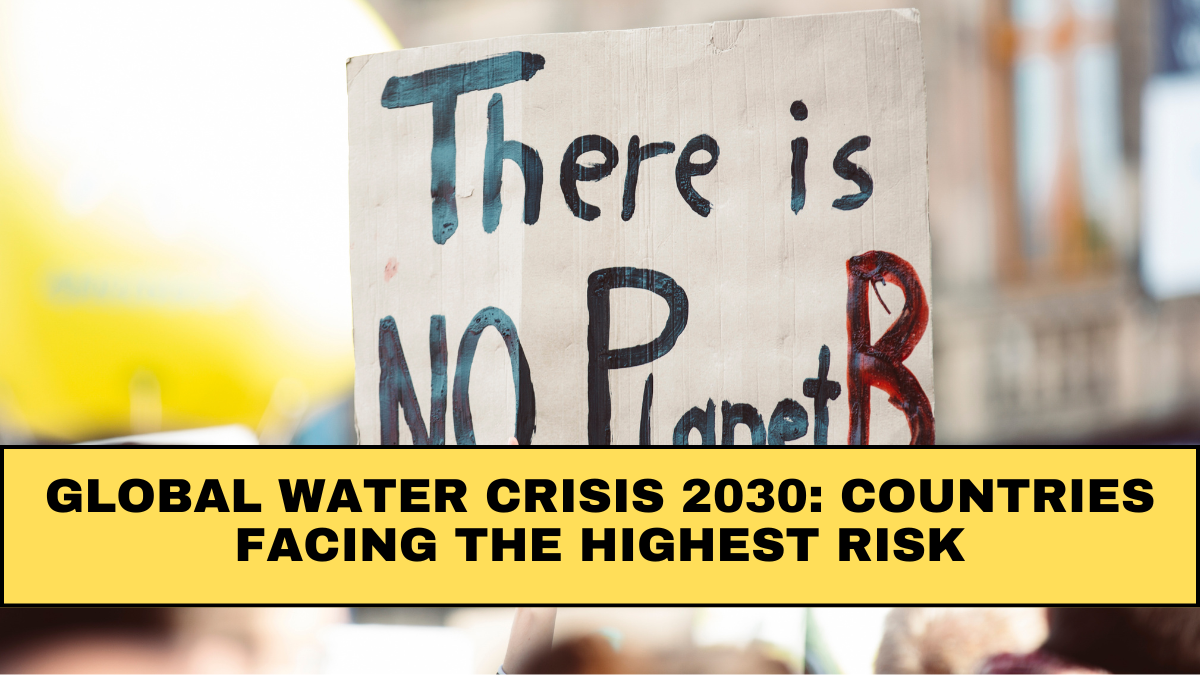
The Global Water Crisis 2030 is emerging as one of the biggest climate risk challenges the world will face in the coming decade. Rising temperatures, uneven rainfall, rapid urbanization, and unsustainable water consumption patterns are pushing several regions toward critical shortages. As freshwater reserves decline and populations continue to grow, experts warn that many countries may face severe water stress unless strong conservation and management policies are put in place.
Across continents, the warning signs are becoming more visible. Rivers are shrinking, groundwater tables are falling, and drought cycles are becoming more frequent. Communities that once relied on steady rainfall are experiencing unpredictable weather shifts, making everyday water needs harder to meet. The Global Water Crisis 2030 is not just an environmental problem; it is deeply connected to food production, public health, energy supply, and economic stability.
Countries Most at Risk in the Global Water Crisis 2030
As climate change intensifies, certain countries are moving rapidly toward extreme water stress. Nations with dry climates, limited freshwater sources, or high population density are especially vulnerable. South Asian and African regions continue to top global risk indexes, where rapid consumption meets limited supply. Many Middle Eastern countries also face long-term scarcity due to low rainfall and overdependence on desalination.
In some parts of the world, water scarcity is becoming a daily reality. Countries experiencing rising demand from agriculture and industries are struggling to balance resource availability. Urban centers are expanding at high speed, placing additional pressure on old supply networks. Climate risk factors such as heatwaves and drought spells are further straining already stressed water systems.
Key Drivers Behind Increasing Watercrisis Levels
Several interconnected factors are contributing to the worsening situation. Climatechange continues to disrupt rainfall patterns, making water availability unpredictable throughout the year. Melting glaciers and reduced snowpacks are diminishing river flows, especially in regions that depend on them for hydropower and irrigation.
Population growth is another significant driver. More people means higher consumption, more agriculture, and greater pressure on groundwater. Many countries are extracting water faster than it can naturally recharge, leading to declining aquifers. Industrial expansion in developing economies is also adding new layers of stress by increasing water demand for manufacturing and cooling systems.
Pollution remains a hidden but severe threat. Contaminated rivers and lakes reduce the amount of usable freshwater, forcing cities and villages to rely more heavily on groundwater. In some regions, poor waste management and chemical discharge have rendered entire water bodies unsafe for consumption.
The Globalrisk Outlook for 2030
As the world moves toward 2030, the Global Water Crisis 2030 outlook indicates rising competition for limited resources. Economists predict that water scarcity may affect food supply chains, increase the cost of basic commodities, and lead to internal migration within countries. Some regions may experience conflict over water-sharing agreements, especially where rivers cross borders.
Extreme climate risk situations may lead to more crop failures, reducing food production and pushing prices higher. Energy production could also be affected because several power plants depend on water for cooling. Countries unable to adapt quickly may face long-term economic losses.
How Countries Are Responding to the Watercrisis
Governments and global agencies are working to reduce the impact through conservation campaigns, better irrigation systems, and wastewater recycling. Some countries are investing in large-scale desalination plants, while others are focusing on rainwater harvesting and groundwater recharge.
Technological adoption is also growing. Smart irrigation, leak-detection systems, and AI-based monitoring tools are helping reduce wastage. However, experts say that individual awareness and community-level participation remain equally important. Without collective action, the long-term impact of Climatechange will continue to deepen the crisis.
Preparing for the Future
Households can take simple steps to manage water more efficiently, including using water-saving fixtures, reducing wastage, and supporting local conservation efforts. Agricultural communities are encouraged to shift to less water-intensive crops and adopt modern irrigation methods.
The Globalrisk assessment for 2030 suggests that early preparation is crucial. Countries investing in sustainable water management today are more likely to avoid severe shortages in the future.
Conclusion
The Global Water Crisis 2030 presents a serious climate risk that demands immediate global attention. With rising temperatures, limited resources, and rapidly increasing consumption, several countries stand at the edge of severe water shortages. Sustainable water management, smart conservation strategies, and strong policy intervention will be essential to prevent large-scale disruptions in food supply, health, and economic stability. Preparing now will help nations and communities secure a safer and more stable future.
FAQs
Which countries face the highest water scarcity risk by 2030?
Regions in South Asia, Africa, and the Middle East are among the most vulnerable due to rapid consumption and limited freshwater availability.
What are the main causes of the Global Water Crisis 2030?
Climatechange, population growth, groundwater depletion, and pollution are the biggest factors driving the crisis.
How does water scarcity affect everyday life?
It impacts food production, drinking water supply, sanitation, public health, and electricity generation.
Can technological solutions help reduce the crisis?
Yes, tools such as desalination, smart irrigation, and AI-based monitoring can help improve water efficiency.
What can individuals do to conserve water?
Reducing wastage, using efficient fixtures, and practicing mindful consumption can significantly support long-term conservation efforts.
Click here to know more.